Gothicized Italic with Barry Morentz - March 21-22nd, 2026

$150.00

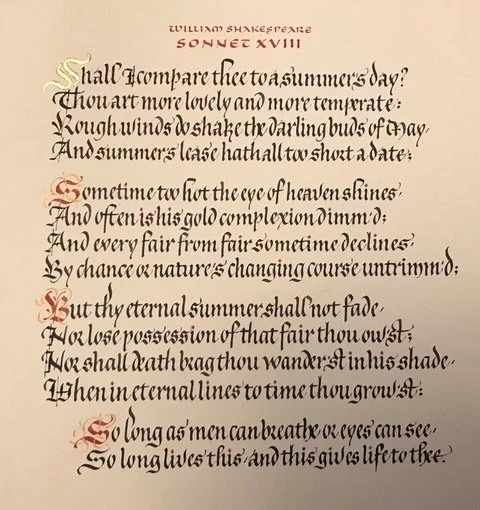
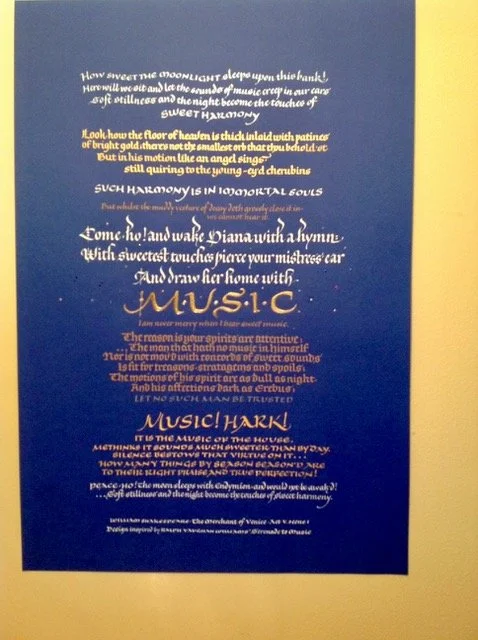
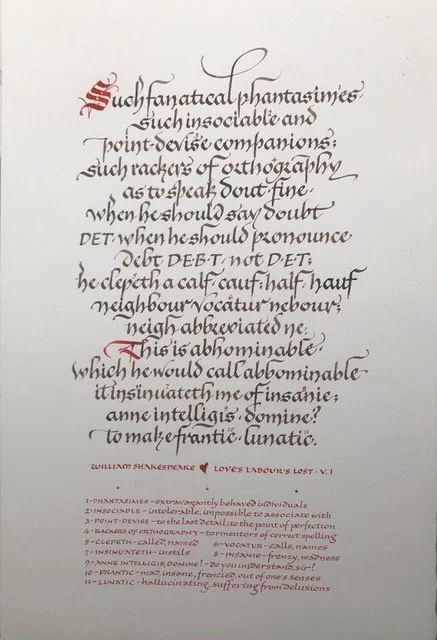
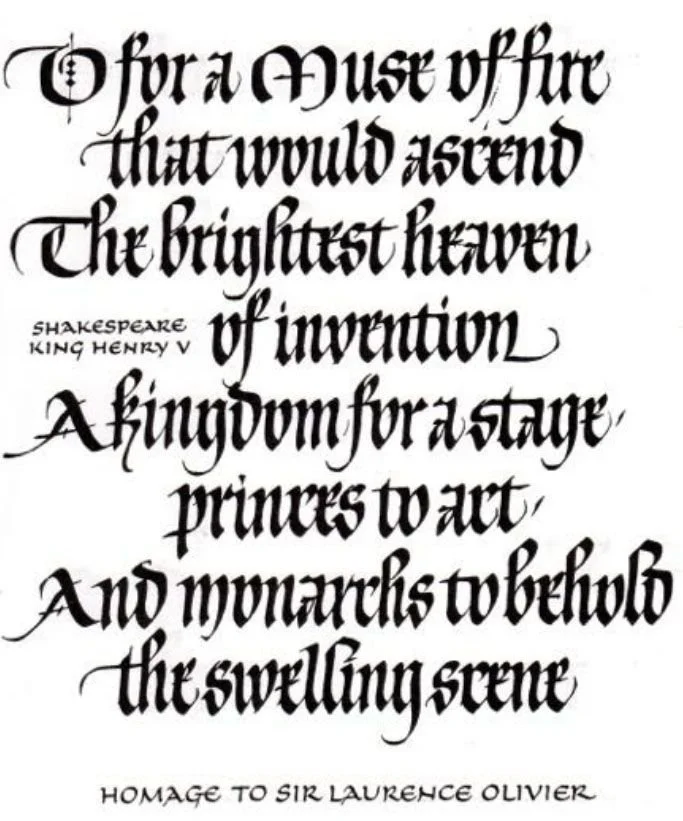
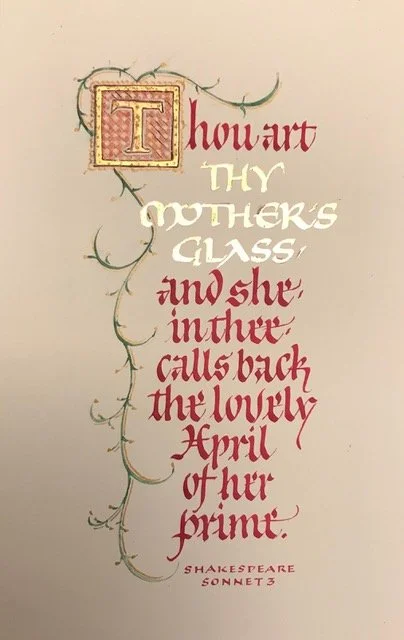
Edward Johnston’s last major manuscript hand, developed in 1924, was a compressed Foundational characterized by a rich, dense texture quite similar to a Gothic Textura. The name Gothicized Italic is, however, somewhat misleading, because the forms themselves bear little, if any, affinity to Italian Renaissance styles. Yet because of its compressed, pointed character, and when written on a slight slope, it does take on something of the lively rhythm of Italic, culminating in an evocative, often sumptuous style of writing. It is most effective for wedding invitations, formal documents, and some poetry.

 In this workshop we begin by looking at Johnston’s forms and their historical antecedents. Then we zoom into the 21st century and consider the forms stripped of anachronisms, and apply modern techniques to make them more viable. Day 1 deals with the minuscules and the rhythm of writing and spacing.

On Day 2 we will work with the variables that permit us to create an endless repertory of Capitals, some quiet and dignified, others lavish and exuberant. And on Day 3 we will experiment with changes in scale, speed, execution, and pen manipulation, thereby creating a rich cornucopia of Gothic lettering that borrows from different periods to create distinctive textures and variations.

This class is not for the newcomer to Calligraphy or for the faint-hearted. Prior experience, and some fluidity in Foundational and Italic is essential. There will be demonstrations of pen manipulation and pressure, elements critical to the sophistication of the forms.

We suggest taking Eleanor Winters’ Blackletter class prior to prepare for this class.

Dates: March 21–22, 2026
Time: (New York Time)
Price: $150
Member Price: $110
Max Enrollment: 15 students
Location: SVA Annex, 214 E. 21st Street, Room 701A

Supply List:

  • usual calligraphalia

  • Speedball C1 or C2, or Mitchell 0 or 1 for practice; some smaller sizes for actual writing. 

  • NO FOUNTAIN PENS -- you cannot understand or perform the subtleties inherent to this style with these instruments; save them for your next flight.

  • favorite inks; stick ink preferable; some colors of gouache including gold, if desired;

  • water jar

  • mixing brushes

  • palette

  • a few small pieces better quality paper such as Arches Text or Stonehenge or Ingres

  • compass (optional),

  • ruler or T-square

  • 2B pencil

  • favorite brief quotation (writing something meaningful helps you to do better lettering.)

Edward Johnston’s last major manuscript hand, developed in 1924, was a compressed Foundational characterized by a rich, dense texture quite similar to a Gothic Textura. The name Gothicized Italic is, however, somewhat misleading, because the forms themselves bear little, if any, affinity to Italian Renaissance styles. Yet because of its compressed, pointed character, and when written on a slight slope, it does take on something of the lively rhythm of Italic, culminating in an evocative, often sumptuous style of writing. It is most effective for wedding invitations, formal documents, and some poetry.

 In this workshop we begin by looking at Johnston’s forms and their historical antecedents. Then we zoom into the 21st century and consider the forms stripped of anachronisms, and apply modern techniques to make them more viable. Day 1 deals with the minuscules and the rhythm of writing and spacing.

On Day 2 we will work with the variables that permit us to create an endless repertory of Capitals, some quiet and dignified, others lavish and exuberant. And on Day 3 we will experiment with changes in scale, speed, execution, and pen manipulation, thereby creating a rich cornucopia of Gothic lettering that borrows from different periods to create distinctive textures and variations.

This class is not for the newcomer to Calligraphy or for the faint-hearted. Prior experience, and some fluidity in Foundational and Italic is essential. There will be demonstrations of pen manipulation and pressure, elements critical to the sophistication of the forms.

We suggest taking Eleanor Winters’ Blackletter class prior to prepare for this class.

Dates: March 21–22, 2026
Time: (New York Time)
Price: $150
Member Price: $110
Max Enrollment: 15 students
Location: SVA Annex, 214 E. 21st Street, Room 701A

Supply List:

  • usual calligraphalia

  • Speedball C1 or C2, or Mitchell 0 or 1 for practice; some smaller sizes for actual writing. 

  • NO FOUNTAIN PENS -- you cannot understand or perform the subtleties inherent to this style with these instruments; save them for your next flight.

  • favorite inks; stick ink preferable; some colors of gouache including gold, if desired;

  • water jar

  • mixing brushes

  • palette

  • a few small pieces better quality paper such as Arches Text or Stonehenge or Ingres

  • compass (optional),

  • ruler or T-square

  • 2B pencil

  • favorite brief quotation (writing something meaningful helps you to do better lettering.)

Please note that registration will open on January 15th and close on March 15th, 2026.

Cancellation policy: Cancellations are allowed at any time, however refunds will only be issued if there is a waitlisted student who will fill your place.
Sickness: If you are registered and need to miss one class due to sickness (we’d rather you stay home and rest!), you are welcome to sit in a future session of the same workshop as we will repeat these introductory classes.
Member pricing: Please use the code sent to your email at checkout. Can’t find it? Check out anyway and email us and we will refund the difference.


About the Instructor:

BARRY MORENTZ was motivated by his love for language and handwriting to study calligraphy. After 46 years he remains fascinated and challenged by the power and beauty of letterforms to dramatically convey the emotional power of a text. Shakespeare, Danté, and the music of Brahms, Elgar, Verdi and Wagner continually inspire his calligraphic interpretations.

In his midtown Manhattan residence he creates calligraphic works and hand-made books, boxes, and portfolios. He began his formal calligraphic studies, primarily with Sheila Waters, in 1977, and eventually with Gottfried Pott, Hermann Zapf, and numerous other calligraphic luminaries. A highlight of his education was paleographic studies in Rome and the Vatican Library.

He has taught at 5 international conferences and has led workshops in Tokyo, Hong Kong, Singapore, and throughout the US and Canada. In 2017 he presented an extensive talk and demonstration at the Pen Museum in Birmingham, UK. When not slumped over his writing desk he spends his time in gourmet food shops and cooking while bombing out on Wagnerian opera.