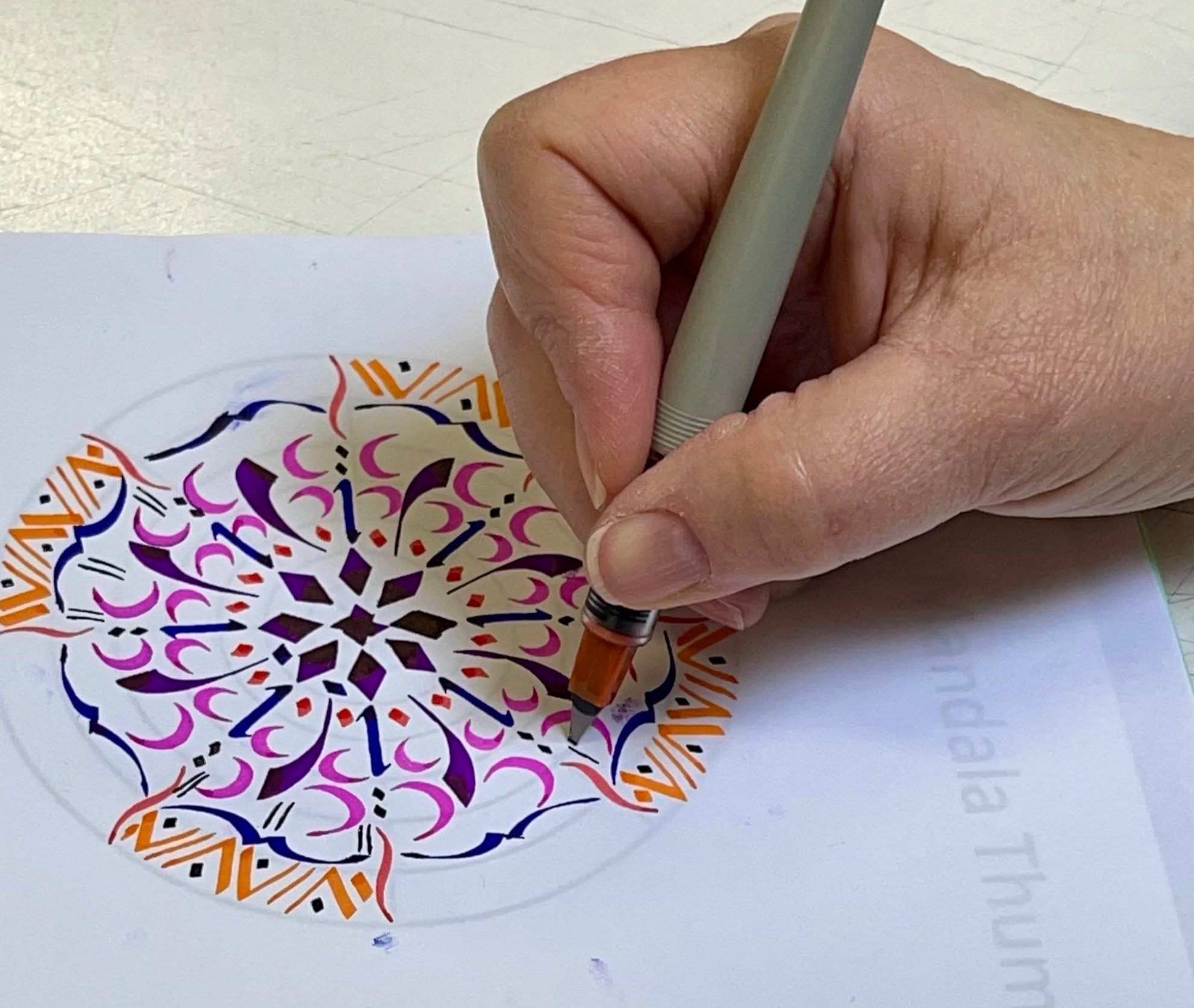
The Art of Calligraphy Mandalas with Debra Dick Winter 2026

$75.00

Required Experience

  • Basic knowledge of at least one broad edge script (such as Uncial or Roman caps)

  • Knowledge of pointed pen for embellishments is helpful but not required unless you want to add flourishes or pointed pen lettering to your mandala

Main Objectives

  • Brief history of the Mandala

  • Review basic strokesfor broad edge pen (with exemplar handouts)

  • Practice basic-stroke patterns (with exemplar handouts)

  • Combine calligraphy and basic-stroke patterns in a circular format/layout and design

  • Create thumbnail trials and evaluate (thumbnail template provided)

  • Create an 8” x 8” finished piece (8” x 8” template provided)

  • Discuss ways to use your Calligraphy Mandalas

FULL WORKHOP DESCRIPTION:

In the ancient Sanskrit language of Hinduism and Buddhism, mandala means “circle.” Monks traditionally used mandalas as visual, symbolic representations of the universe. Today, mandala art helps people to relax, to focus their attention, and as an aid in the practice of meditation.

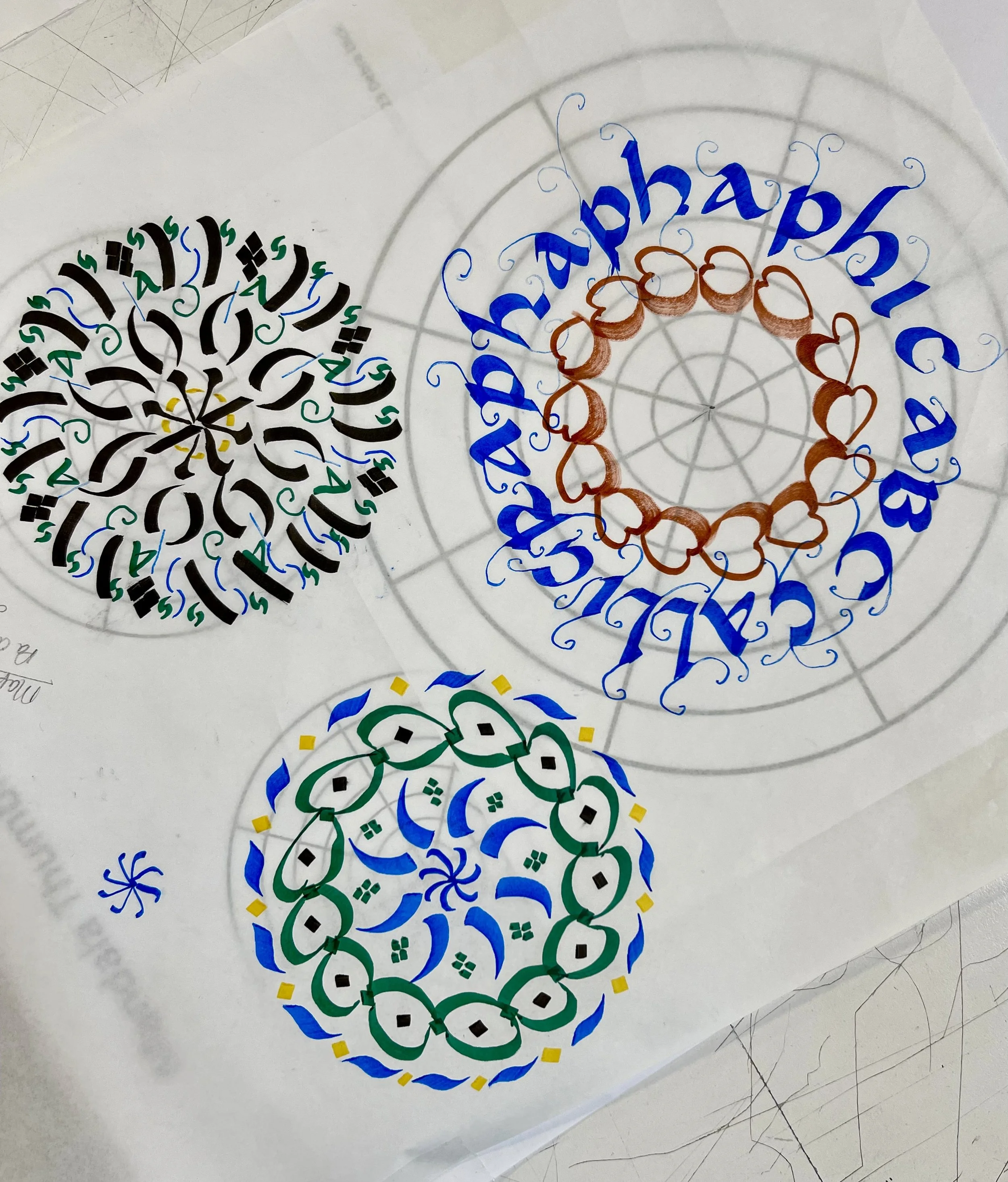
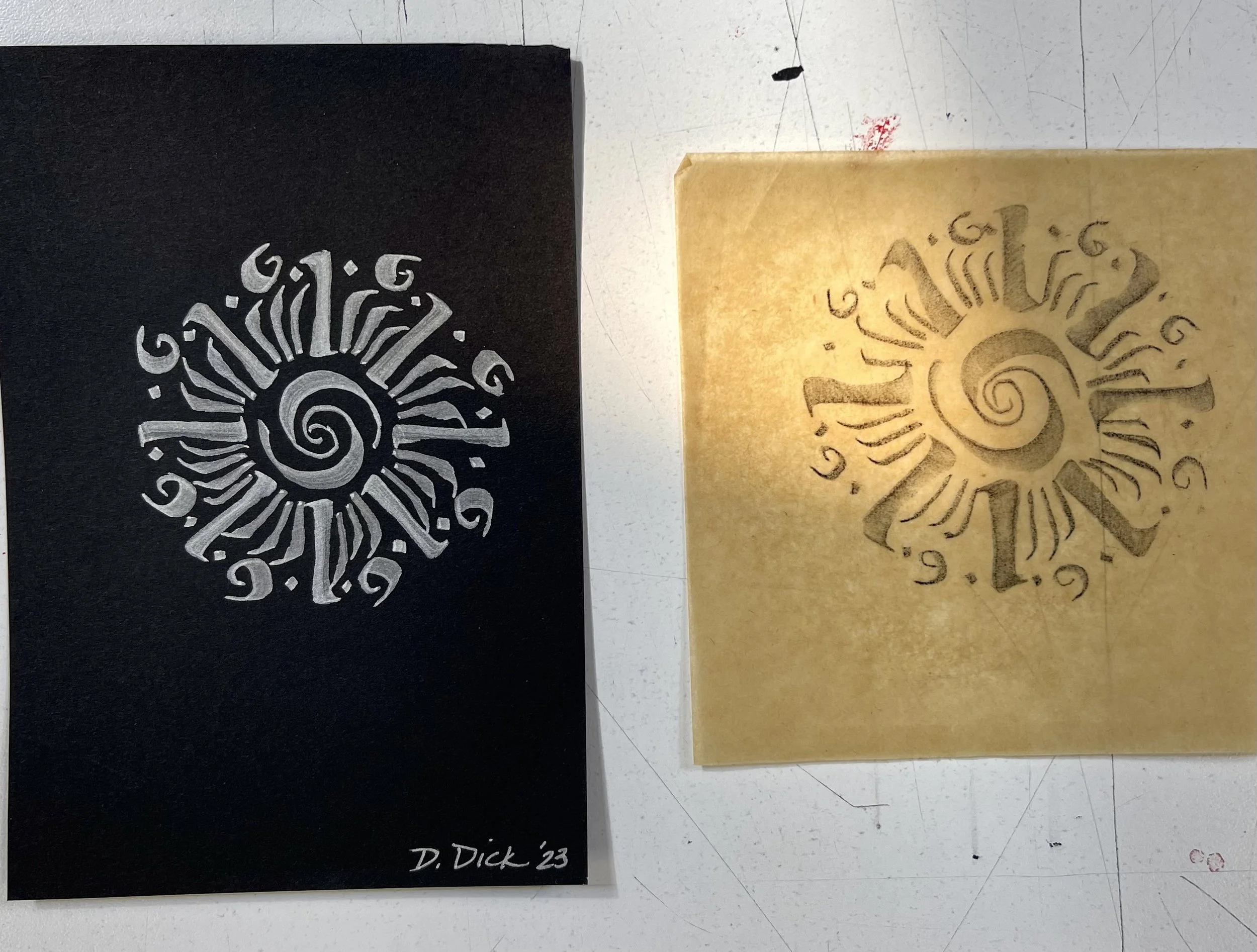
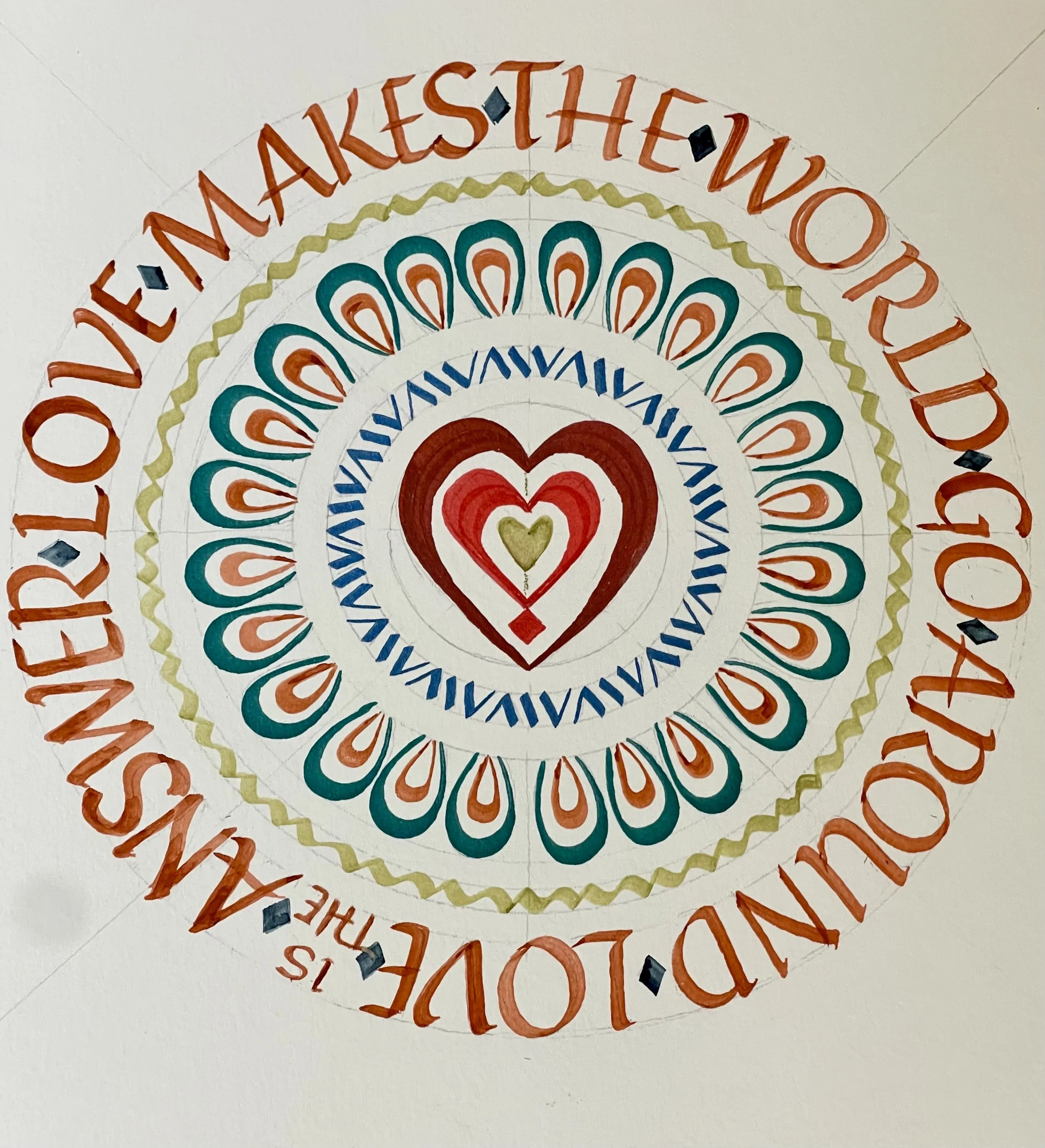
While we will not delve into the spiritual aspects of mandala art in this workshop, students at every skill level—from beginner to those with years of experience—will find that making a calligraphy mandala is a playful and relaxing way to focus on and to perfect the foundations of calligraphic letterforms. To this end, our mandalas will incorporate basic strokes, stroke patterns, and calligraphic writing using both broad and pointed pens.

If time allows you can make afinished mandala during the workshop, but mostly you will be playing and experimenting with several different mandala patterns. You can further develop any of your mandala trials at home. Your calligraphy mandalas can be used in so many ways—from seasonal ornaments, coasters, signage, logos, and even monograms!

Come with a playful and relaxed mindset and see what magic you can make with eight basic stokes!

Dates: May 17, 2026
Time: 10am–3pm (New York time)
Price: $75
Member Price: $35
Max Enrollment: 15 students
Location: SVA Annex, 214 E. 21st Street, Room 701A

Necessary Materials:

MATERIALS:

  • Broad pens—metal dip pens, parallel pens, or excellent quality calligraphy markers of your choice

    • At least two contrasting sizes

  • Pointed pens: 

    • Optional, but they do make a nice contrast with broad pen strokes when combined in a mandala

  • Ink (if using steel nibs)

    • Black and 2-3 more colors of your choices

    • Goauche in assorted colors (if you have it and know how to use it in your pens)

      • Brushes, water cup, and containers/palette for mixing gouache

  • 1 or 2 pieces of “good” paper for finished work—Arches text or other paper that takes ink well:

    • Cut into squares: 10” x 10” (for 8” round mandala

    • Bring good paper only if you want to walk away with a finished piece.

      • Since everyone works at a different pace our focus will be on individual experimentation 

rather than creating a perfect finished piece.

  • Translucent marker layout paper—4-5 sheets—for mandala trials 

    • Minimum 8.5” x 11” for trials

    • Must have so that you can see the mandala template through your practice paper:

      • Bienfang Graphics 360, OR

      • Borden & Riley Boris Layout Paper for Markers

  • Short quote or meaningful words of your choice

  • Additional items:

    • Compass 

    • Protractor 

    • Ruler (minimum 12”)

    • Pencil

    • Eraser

Required Experience

  • Basic knowledge of at least one broad edge script (such as Uncial or Roman caps)

  • Knowledge of pointed pen for embellishments is helpful but not required unless you want to add flourishes or pointed pen lettering to your mandala

Main Objectives

  • Brief history of the Mandala

  • Review basic strokesfor broad edge pen (with exemplar handouts)

  • Practice basic-stroke patterns (with exemplar handouts)

  • Combine calligraphy and basic-stroke patterns in a circular format/layout and design

  • Create thumbnail trials and evaluate (thumbnail template provided)

  • Create an 8” x 8” finished piece (8” x 8” template provided)

  • Discuss ways to use your Calligraphy Mandalas

FULL WORKHOP DESCRIPTION:

In the ancient Sanskrit language of Hinduism and Buddhism, mandala means “circle.” Monks traditionally used mandalas as visual, symbolic representations of the universe. Today, mandala art helps people to relax, to focus their attention, and as an aid in the practice of meditation.

While we will not delve into the spiritual aspects of mandala art in this workshop, students at every skill level—from beginner to those with years of experience—will find that making a calligraphy mandala is a playful and relaxing way to focus on and to perfect the foundations of calligraphic letterforms. To this end, our mandalas will incorporate basic strokes, stroke patterns, and calligraphic writing using both broad and pointed pens.

If time allows you can make afinished mandala during the workshop, but mostly you will be playing and experimenting with several different mandala patterns. You can further develop any of your mandala trials at home. Your calligraphy mandalas can be used in so many ways—from seasonal ornaments, coasters, signage, logos, and even monograms!

Come with a playful and relaxed mindset and see what magic you can make with eight basic stokes!

Dates: May 17, 2026
Time: 10am–3pm (New York time)
Price: $75
Member Price: $35
Max Enrollment: 15 students
Location: SVA Annex, 214 E. 21st Street, Room 701A

Necessary Materials:

MATERIALS:

  • Broad pens—metal dip pens, parallel pens, or excellent quality calligraphy markers of your choice

    • At least two contrasting sizes

  • Pointed pens: 

    • Optional, but they do make a nice contrast with broad pen strokes when combined in a mandala

  • Ink (if using steel nibs)

    • Black and 2-3 more colors of your choices

    • Goauche in assorted colors (if you have it and know how to use it in your pens)

      • Brushes, water cup, and containers/palette for mixing gouache

  • 1 or 2 pieces of “good” paper for finished work—Arches text or other paper that takes ink well:

    • Cut into squares: 10” x 10” (for 8” round mandala

    • Bring good paper only if you want to walk away with a finished piece.

      • Since everyone works at a different pace our focus will be on individual experimentation 

rather than creating a perfect finished piece.

  • Translucent marker layout paper—4-5 sheets—for mandala trials 

    • Minimum 8.5” x 11” for trials

    • Must have so that you can see the mandala template through your practice paper:

      • Bienfang Graphics 360, OR

      • Borden & Riley Boris Layout Paper for Markers

  • Short quote or meaningful words of your choice

  • Additional items:

    • Compass 

    • Protractor 

    • Ruler (minimum 12”)

    • Pencil

    • Eraser

Please note that registration will open on September 1st and close on October 15th, 2025.

Cancellation policy: Cancellations are allowed at any time, however refunds will only be issued if there is a waitlisted student who will fill your place.
Sickness: If you are registered and need to miss one class due to sickness (we’d rather you stay home and rest!), you are welcome to sit in a future session of the same workshop as we will repeat these introductory classes.
Member pricing: Please use the code sent to your email at checkout. Can’t find it? Check out anyway and email us and we will refund the difference.
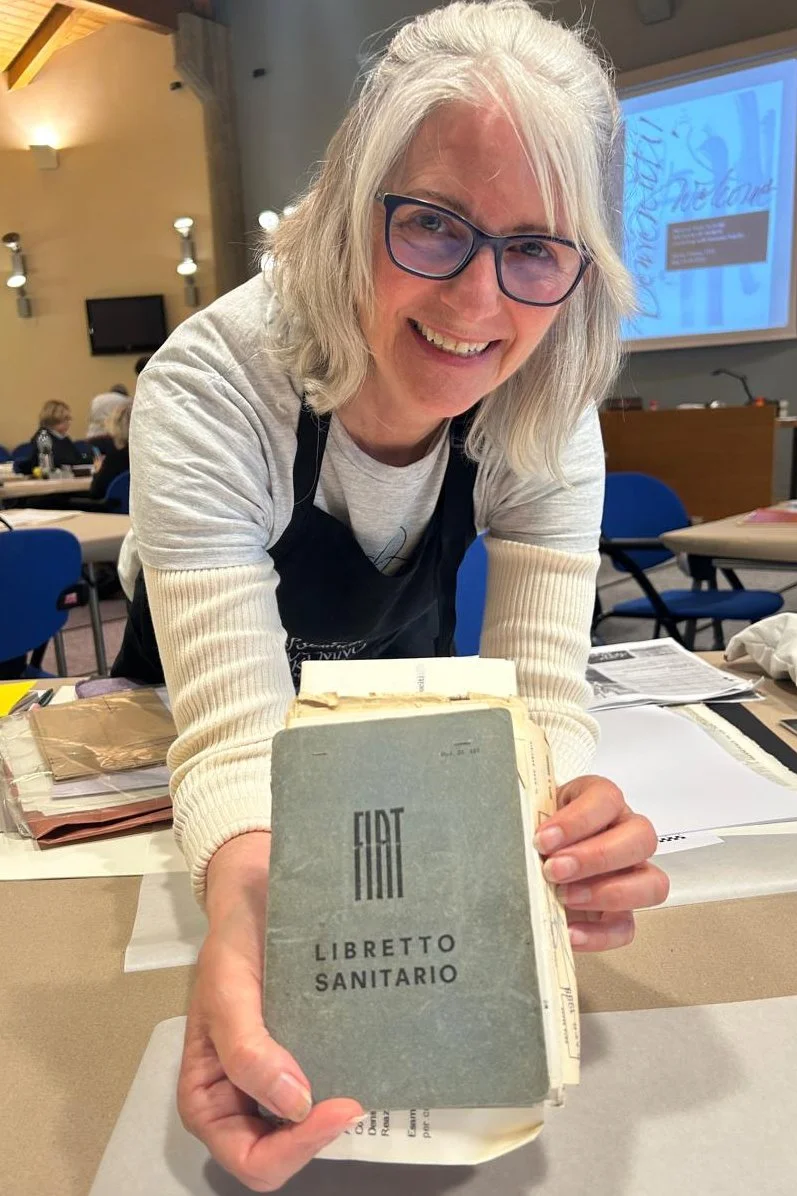

About the Instructor:

Debra has been a freelance calligrapher and teaching artist since the early 1990’s. Her various commissions for businesses, colleges, and community organizations include t-shirt designs, corporate resolutions, logos, and one-of-a-kind calligraphic art on paper and canvas. In addition to her freelance work, Debra was co-founder of Flourish Creative Workspace, LLC, a place for learning calligraphy, lettering, book and paper arts, and bespoke crafts in Sugarloaf, PA.

For more than three decades, Deb has introduced people of all ages—from 3 to 85 years old—to the art of beautiful writing in her numerous calligraphy workshops and art residencies in schools, libraries, museums, and for the Society of Scribes, New York City, and the Philadelphia Calligraphers’ Society. She has been a rostered artist with the PA Council on the Arts, Arts in Education Program since 2001 —now known as The Armature—where she focuses on using calligraphic and related arts to enhance learning in the classroom. 

Debra’s art has been published in Letter Arts Review, Calligraphers’ Engagement Calendar, and Bound and Lettered. She has collaborated several times with botanical artist, Pamela Gladding of PM Design Group, on greeting cards and surface designs. She also created more than thirty broad-pen illustrations for Zoo Haiku, a poetry book by Michael Czarnecki published by the Paper Kite Press in 2004. 

In addition to calligraphy, Debra creates decorated letters, paste-papers, and hand-made books. More recently she has been teaching the joy of illustrated journaling through workshops and small retreats. You can see her work on Instagram at https://www.instagram.com/debradick/ Website coming soon!